
Applications · made to your drawing
Custom shafts for power tool drive assemblies
Specify the connection features, material condition and inspection requirements that your tool assembly needs.
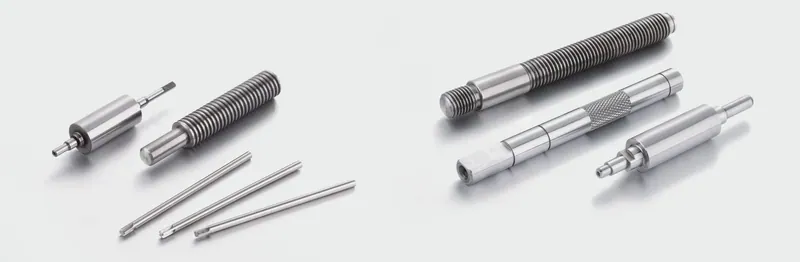
MICRO manufactures shafts to customer drawings for power tool applications, including tools such as grinders and lawn mowers. The component review starts with how the shaft locates, connects and is inspected in your assembly. Flats, grooves, steps or knurled features may each serve a different purpose; their appearance alone does not define a suitable connection. Provide the relevant drawing and technical requirements so engineering can review the geometry and manufacturing route for your project.
Describe what the connection must do
Explain which features locate the component and which form the connection to a mating part. A groove used for axial retention needs its position and edge requirements defined. A flat or knurl needs a clear drawing definition and matching acceptance criteria. These are buyer review points, not a list of universal design recommendations. We manufacture to the agreed specification rather than assigning a torque or load rating from a photograph.
- Identify the mating part and the feature that controls its position.
- Define the connection geometry, relevant datums and finished-condition dimensions.
- Flag burr-sensitive intersections, assembly edges and surfaces requiring protection.
Keep material, treatment and dimensions connected
State the material grade and condition required by your design. Where hardness, heat treatment or coating is specified, include the applicable requirements and supporting records needed. The inspection plan should make clear which checks apply after each relevant operation. Heat and surface treatment are arranged to specification, subject to review. No general material or treatment choice on this page establishes the strength, wear life or service performance of a completed tool.
Agree the sample and production acceptance plan
Use sample approval to confirm both the component definition and the inspection handoff. Identify critical connection features, the methods used to inspect them and any customer fixtures or mating checks proposed for review. MICRO's camera sorting covers the appearance and dimensional items defined for the part; it is not an assurance that every possible characteristic has been fully inspected. Bring packaging and handling requirements into the review where exposed connection surfaces could be damaged.
Plan the next step
Connect your application, part geometry and required evidence before placing an order.
Related technical guides
Explore manufacturing · Inspection equipment and certificates
Questions before you enquire
Can the shaft be quoted from a product photograph?
A photograph is useful context, but the drawing or agreed technical definition is needed to review the part. Include material, treatment, quantities and inspection requirements.
Does a knurled or flattened shaft have a standard load rating?
No rating can be inferred from the illustrated feature. The buyer defines the assembly and performance requirements; component geometry and manufacturing feasibility are reviewed for that design.
Are all features automatically covered by camera sorting?
No. Camera sorting applies to the appearance and dimensional items defined in the part's inspection plan. Identify other critical characteristics and the checks or records required for them during review.